MODUS
Live software for the Swedish Armed Forces. 600+ users, 80% time saved
- Role
- UX designer & developer
- Organisation
- Swedish Armed Forces
- Scope
- Voluntary project
- Timeframe
- 2025/2026
- Team
- Project team
- Deliverable
- Software solution
- Problem
- Part-time soldiers’ duty periods were handled with letters, Excel and PRIO, with hours of manual work for every exercise.
- My role
- Initial design, flows, test set-up and user testing. We did the development together as a team.
- What I did
- An event-driven system where the commander publishes a duty period and all soldiers respond in the app.
- Result
- 600+ users in live operation. Administration per duty period went from 2.5 hours to 15 minutes.
01 Problem
Part-time soldiers’ duty periods were managed with tools built for office hours (PRIO, Excel and paper), even though the work happens during exercises, evenings and weekends. The result: scattered information and hours of manual administration.
02 Background & start
We started the project on our own initiative together with Livgardet. The team was me (Linköping University, design and testing), Axel Gren (Lund University, project manager) and Ivan Soltani (KTH, technical lead). In spring 2026 the system was used live across the brigade, and before summer 2026 we were accepted into STRILAB.
03 Process
The process was built on constant iteration and frequent platform switches, so that users always had a working product in hand.
1Sprint 1 – Sketching
Sketched the event-driven flow in Figma and Figma Make.
2POC
Built a first version in Base44 where you can create and sign up for duty periods and export participant lists.
3Tech-demo
Showed the system to the company commander, an administrator and other stakeholders. In dialogue with a lawyer and the brigade, we decided to handle personal data on the limited scale the system is used at, with the aim of building a more sustainable system going forward.
4Sprint 2 – MVP
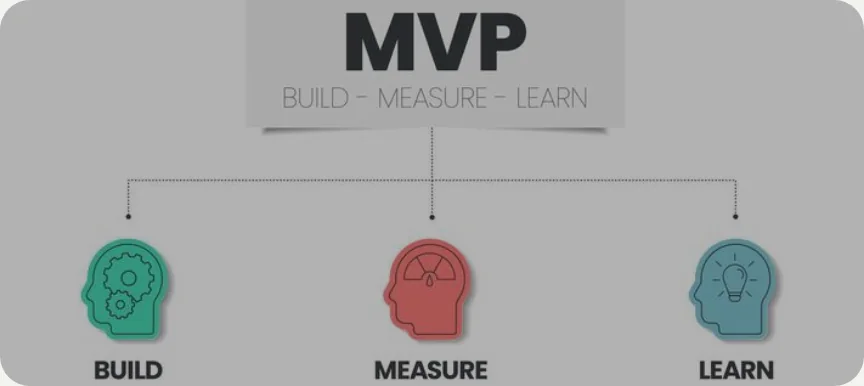
Finished the system based on the feedback, made sure the mobile view worked and created a survey.
5Sprint 3 – Iteration
Moved to Lovable with our own database (Supabase) and fixed the feedback from the test.

04 User testing
The system was tested live during an actual exercise, with around 60 participants in two platoons. Commanders created and published duty periods, and soldiers signed up. The time saved was measured with an evaluation survey, compared with the time measured before.
05 Design solution
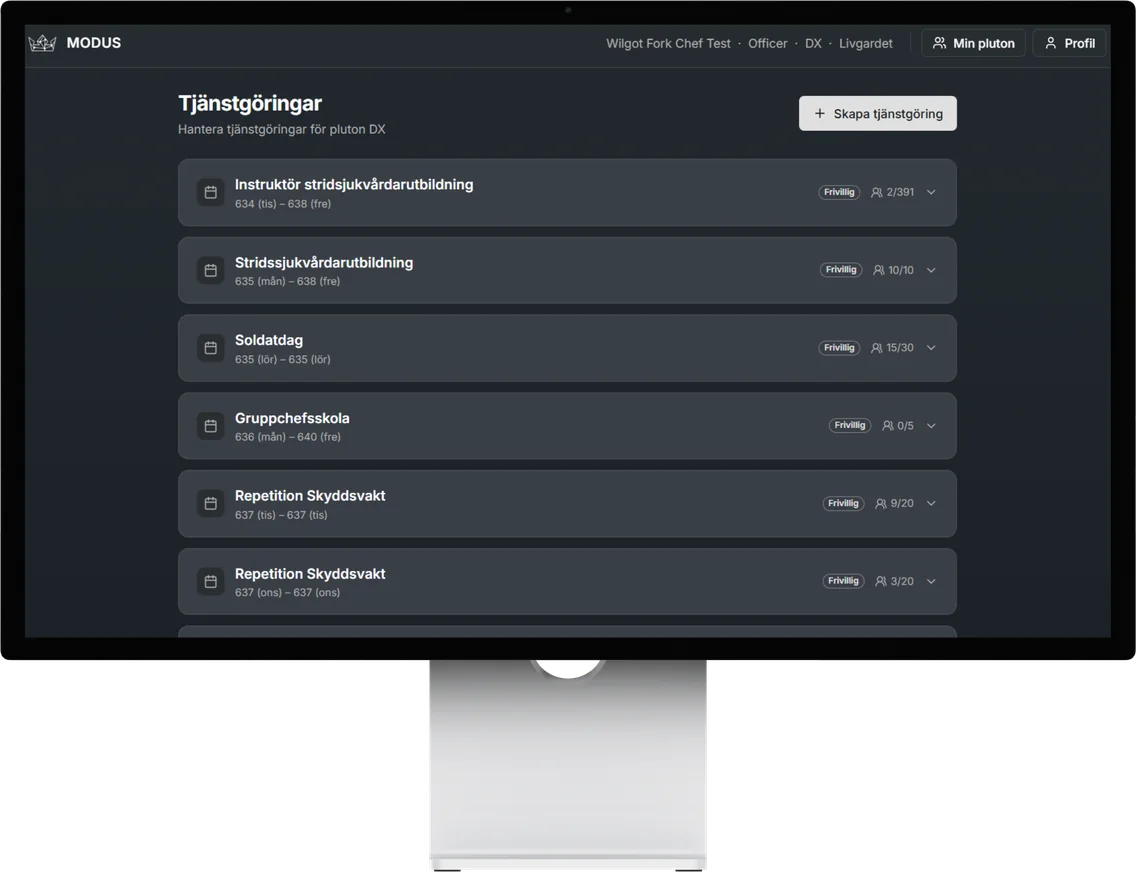
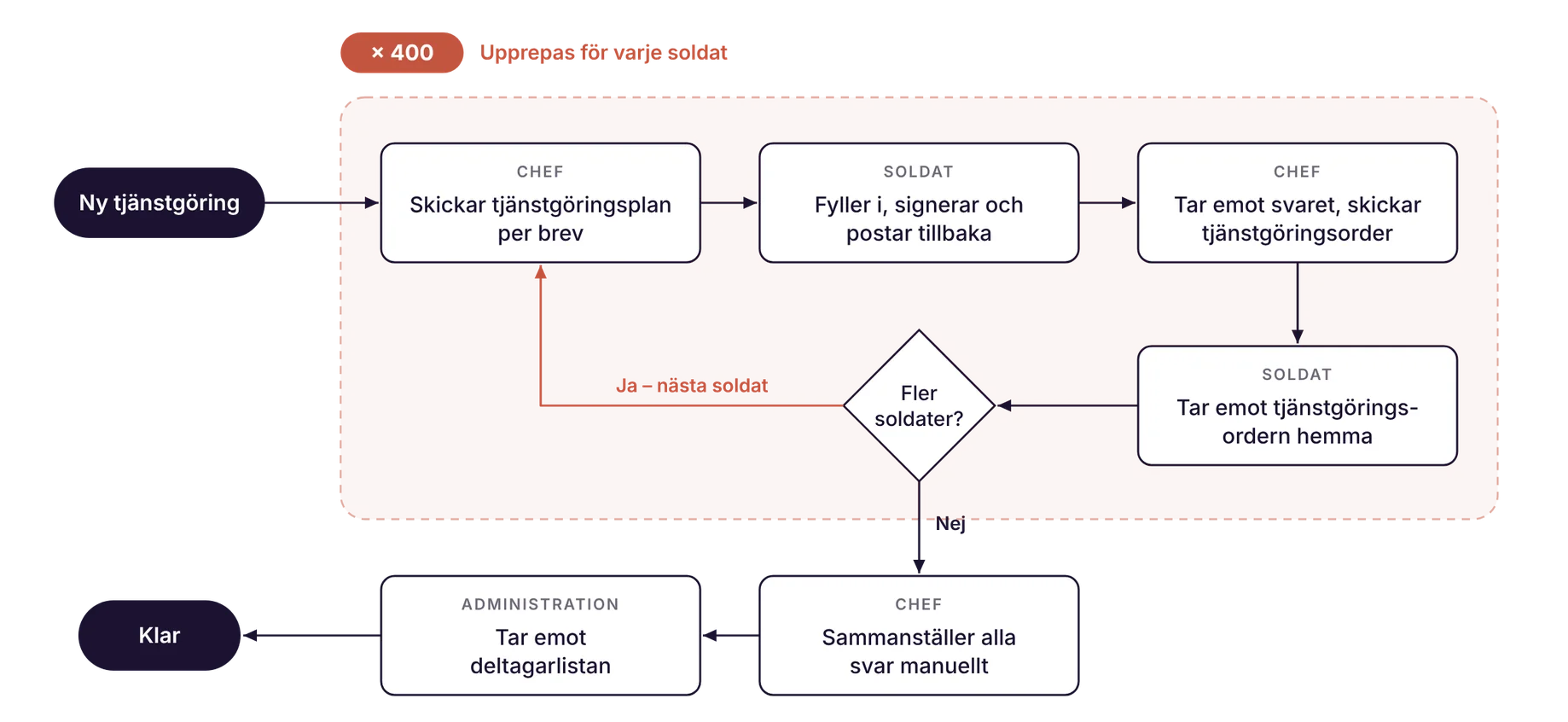
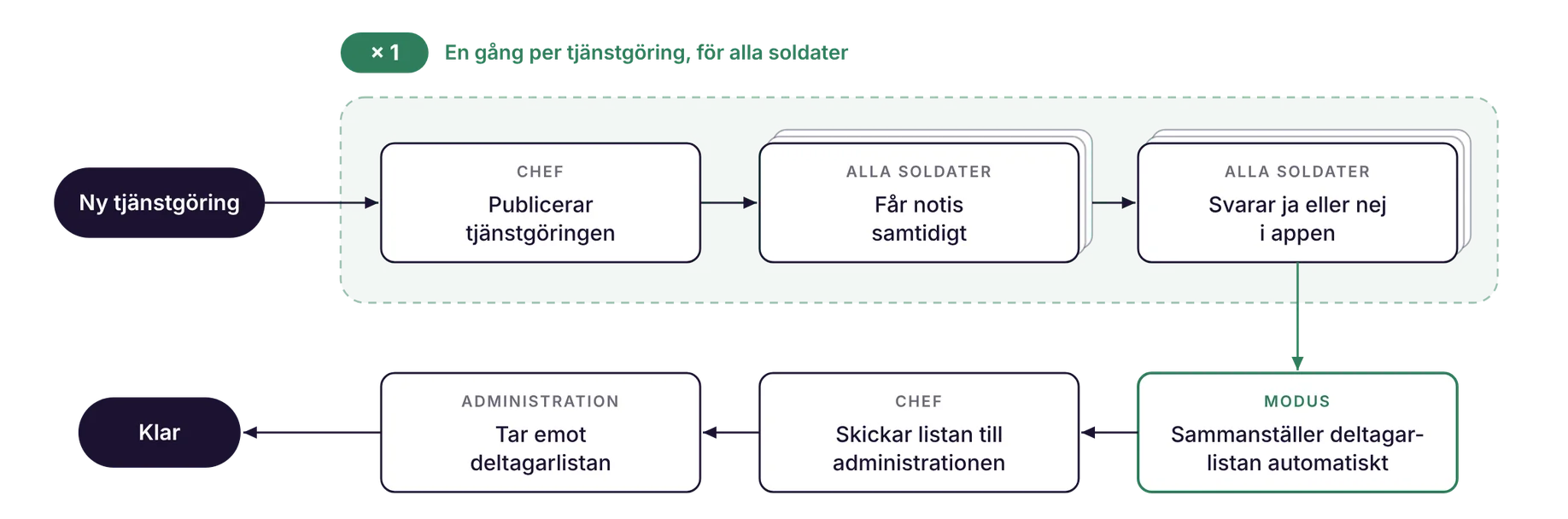
The system is event-driven: the commander creates and publishes a duty period once, all soldiers respond digitally, and the participant list is compiled automatically. Before, the same thing was a letter-based process repeated for every soldier, up to 30 times per duty period and several times a year. MODUS replaces that back-and-forth with a single flow: from many manual steps per soldier to one event per exercise.
Before MODUS
With MODUS
What it looks like
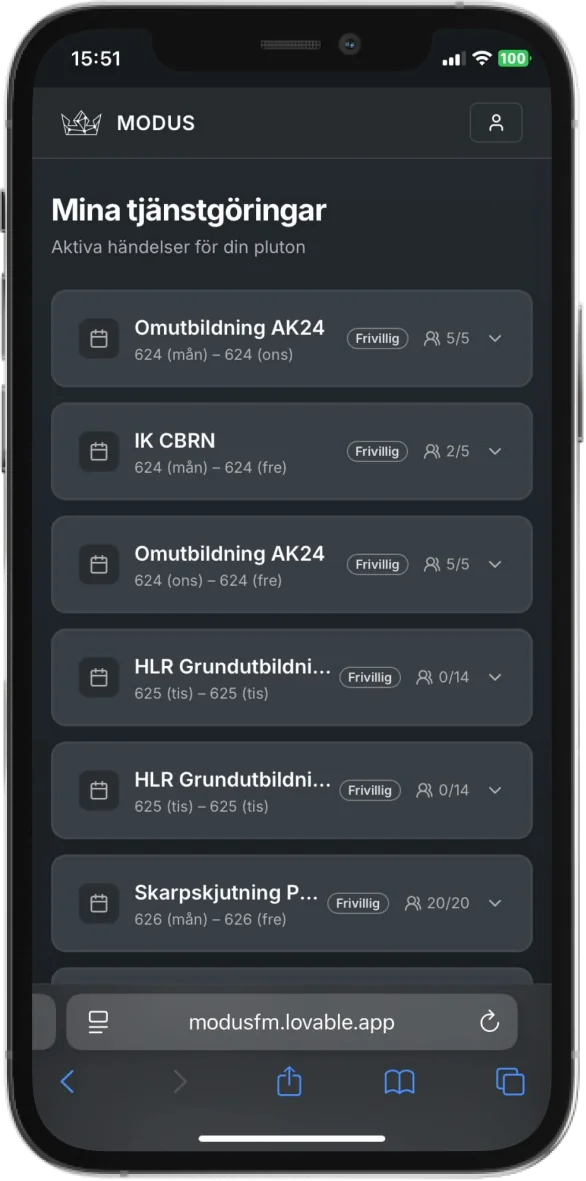
The pictures show an early version. The system is in live use, and some views are not shown for security reasons.
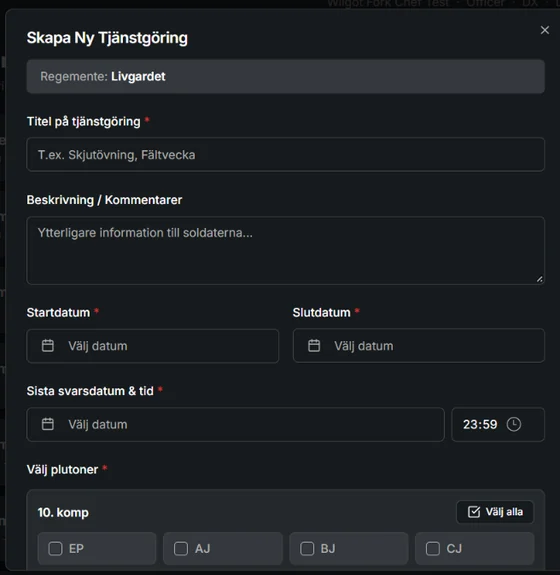
1. The commander creates the duty period and sets what’s needed, such as the reply deadline, the platoons or companies involved, and the dates.
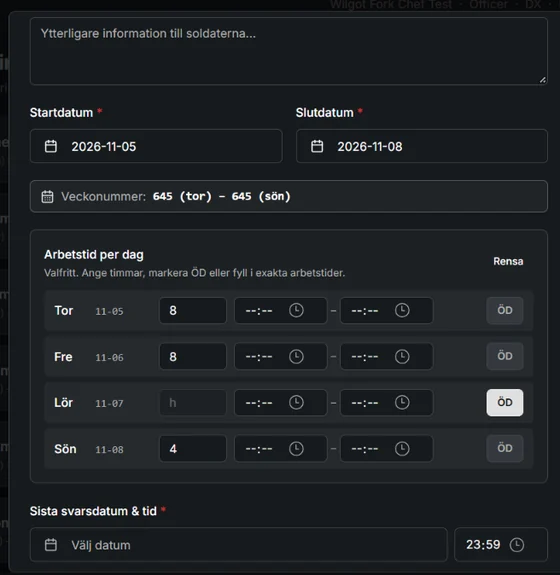
2. Many soldiers wanted to see the working hours directly in MODUS. So the commander can easily fill in the hours for each day between the duty period’s dates.
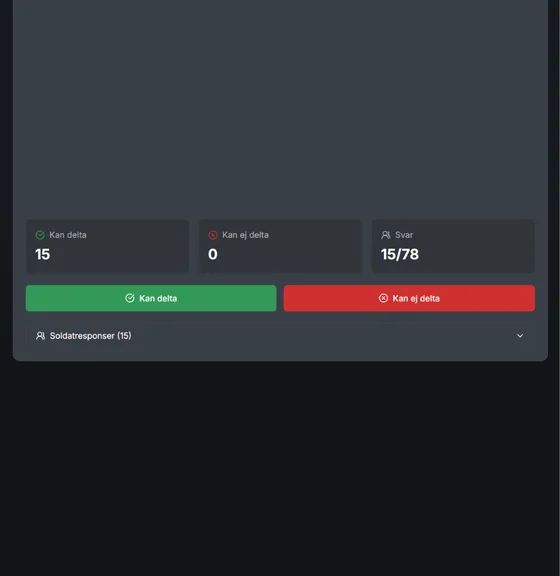
3. For mandatory duty periods, the soldier answers yes or no. For optional ones you can only sign up or withdraw, since there it only matters who can attend.
06 Results
MODUS is used across the brigade today by 600+ users, and before summer 2026 it was accepted into STRILAB, the Swedish Armed Forces’ first innovation programme, for further development. This page covers the work up to STRILAB, from identifying the problem to a live system in operation.
 Project accepted into STRILAB, the Swedish Armed Forces’ first innovation programme
07 Lesson learned
I learned to take a concrete problem and, by getting an early prototype into the users’ hands, quickly deliver something that actually makes a difference. It was also the first time we ran a system with many users, which was both instructive and a lot of fun.